
Temiya Jataka
Temiya Jataka
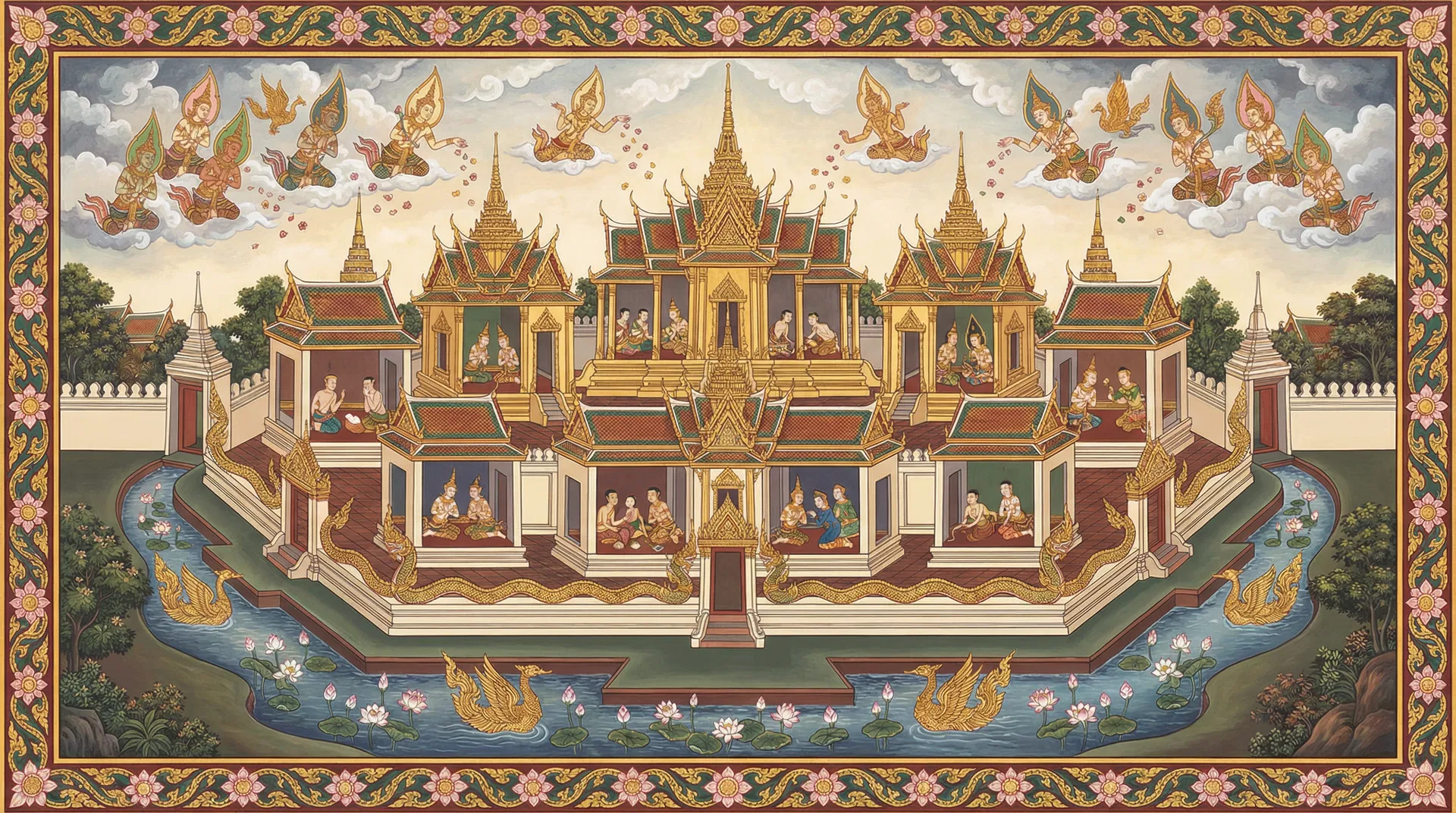
In the opulent kingdom of Sankhapura, a kingdom renowned for its splendor and its flourishing trade, lived a prince named Temiya. From the very moment of his birth, Temiya was unlike any other child. He possessed an extraordinary stillness, a profound detachment from the worldly pleasures and pains that occupied the minds of most people.
As he grew, this detachment deepened. While other children delighted in games and toys, Temiya would sit for hours in quiet contemplation, his gaze often fixed on the impermanence of all things. He saw the laughter of children as fleeting, the treasures of the kingdom as transient, and the grandest palaces as destined for decay.
His parents, King Sankha and Queen Pancali, were deeply perplexed and worried. They showered him with the finest silks, the most exquisite jewels, and the most entertaining diversions. Yet, Temiya remained unmoved, his serene demeanor a stark contrast to the vibrant life of the court.
"My son," Queen Pancali would plead, her heart heavy with concern, "why do you not smile? Why do you not enjoy the wonders that surround you?"
Temiya would offer a gentle, faraway look. "Mother," he would reply softly, "these things are like dreams. They appear real, but they are fleeting. True happiness lies not in possessing these transient things, but in understanding their true nature – their emptiness."
King Sankha, a man of action and worldly understanding, grew increasingly frustrated. He feared that his son's peculiar disposition was a sign of weakness, an inability to face the challenges of kingship. He believed that a true ruler must be engaged with the world, must desire power and prestige.
One day, King Sankha, in a moment of desperate paternal love and misguided concern, decided to test his son. He summoned the royal executioner. "My son," he declared, his voice strained, "you refuse to engage with life. You show no desire for the world. Perhaps a taste of its harsh realities will awaken you. Prepare to be executed!"
The court gasped. The queen fainted. Prince Temiya, however, remained perfectly calm. As the executioner raised his sword, Temiya looked at him with eyes full of understanding, not fear.
"Do what you must," Temiya said, his voice serene. "For I am not truly born, nor shall I truly die. This body is but a temporary vessel."
The executioner, a gruff man hardened by his profession, found himself unnerved by the prince's absolute lack of fear. He could not bring himself to strike. He lowered his sword, trembling.
The king, witnessing this, was utterly bewildered. He had expected his son to beg for his life, to show terror. Instead, he saw only profound peace.
Overwhelmed by his son's unwavering equanimity, King Sankha realized that he had misunderstood Temiya's nature. Temiya was not weak; he was profoundly wise. His detachment was not a flaw, but a sign of his advanced spiritual understanding. He saw the world with clarity, recognizing its impermanence and the suffering inherent in attachment.
King Sankha, filled with remorse and a newfound respect, ordered his son to be freed. He understood that Temiya was destined for a different path, a path of renunciation and spiritual awakening, not of worldly power.
Temiya, having demonstrated the depth of his realization and the futility of worldly pursuits, was finally allowed to follow his true calling. He renounced his royal status, his wealth, and his worldly ties, and went forth to live a life of asceticism, dedicating himself to the pursuit of ultimate truth and liberation.
His kingdom, initially bewildered, eventually came to understand the profound wisdom of their prince. They recognized that true fulfillment does not come from external possessions or power, but from inner peace and the realization of the self.
Prince Temiya, through his radical act of detachment, taught his kingdom, and all who heard his story, that the greatest freedom comes from letting go of the illusions of the material world and embracing the eternal truth within.
— In-Article Ad —
💡Moral of the Story
True freedom and peace are found not in worldly possessions or power, but in detachment from impermanence and the realization of the true, eternal nature of the self.
Perfection: Renunciation (Nekkhamma)
— Ad Space (728x90) —
More Jataka Tales You May Enjoy
 466Dvādasanipāta
Nimi Jataka
Nimi JatakaIn the ancient city of Mithila, nestled amidst lush gardens and bustling marketplaces, re...
💡 Inner spiritual cultivation is the path to true happiness and liberation, far beyond the pleasures of even the celestial realms.
46EkanipātaThe Bodhisatta as the Weaver Bird
The Bodhisatta as the Weaver BirdIn the lush green canopy of a sprawling banyan tree, where sunlight...
💡 Diligence, honesty, and compassion are the foundations of true security and a virtuous life.
73EkanipātaThe Tale of the Elephant Prince
In a time long past, when the Bodhisatta was yet to attain full Buddhahood and was circulating throu...
💡 True loyalty and devotion can overcome deception and protect the innocent.
 251Tikanipāta
Nandiya-Jātaka
Nandiya-JātakaIn the heart of a lush forest, where ancient trees whispered secrets to the wind and s...
💡 True fulfillment and lasting happiness are found not in worldly possessions or power, but in detachment, simplicity, and the pursuit of spiritual enlightenment. The greatest leadership is often demonstrated through selfless sacrifice and the courage to follow one's highest calling.
127EkanipātaSasa Jataka
Sasa JatakaLong ago, in a time when the world was young and the stars seemed closer to the earth, th...
💡 The highest form of generosity is to give without reservation, even one's own life, motivated purely by compassion for others.
8EkanipātaThe Wise King of Birds
The Wise King of BirdsPerched atop the highest peak of the Himalayas, where the air was thin and cry...
💡 True wisdom lies in selfless compassion, and the greatest sacrifices bring about miraculous salvation.
— Multiplex Ad —